
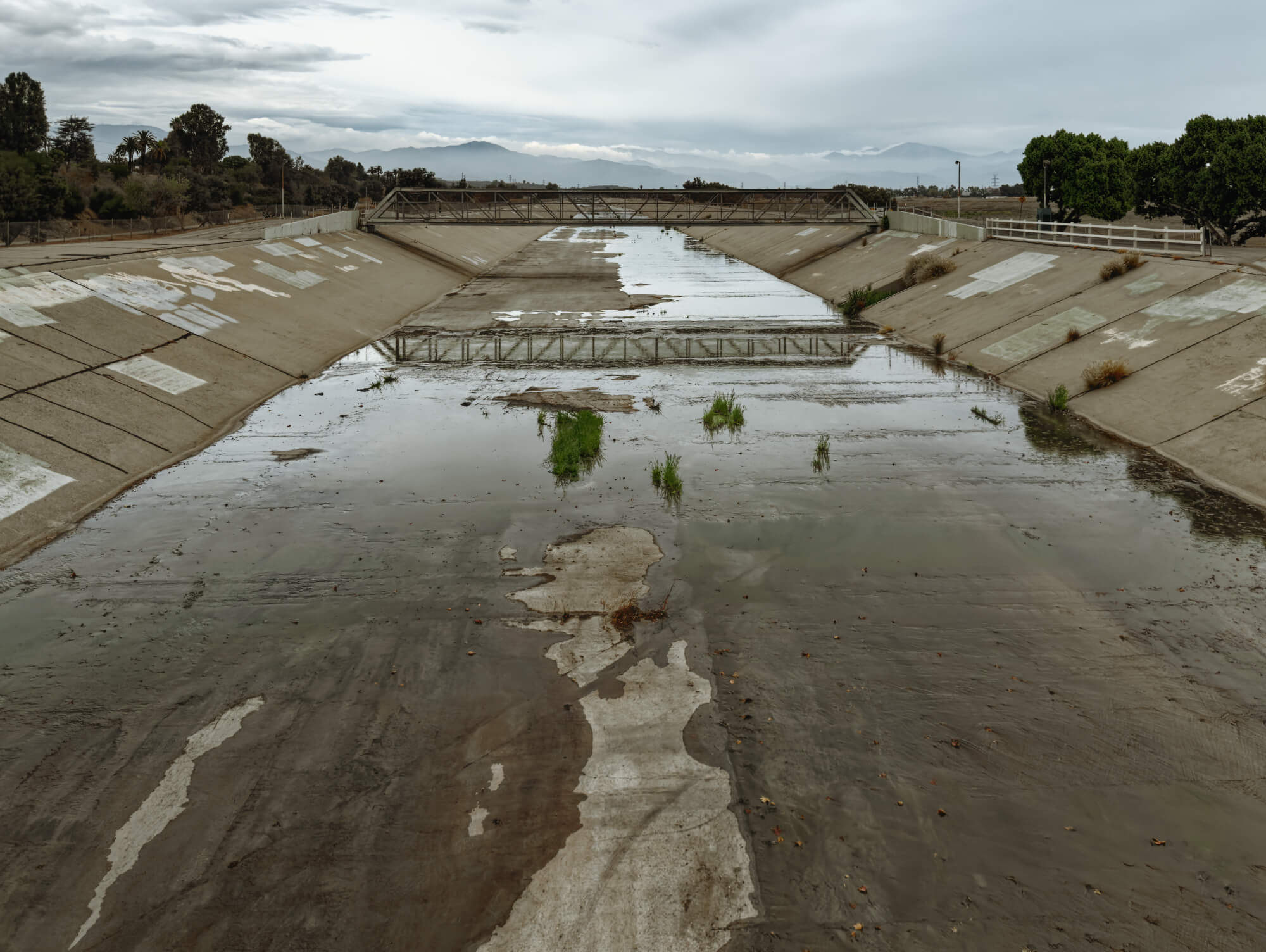
The Los Angeles River isn’t the only SoCal waterway to dramatically impact the region’s history. Believe it or not, on January 8, 1847, this otherwise unremarkable stretch of what is now the Río Hondo in present-day Montebello was suddenly the most consequential site in all California, let alone for the nearby City of Angels.
At the time, the San Gabriel River flowed through this channel. Later flooding diverted it to a new course, leaving the Río Hondo ("deep river") as a separate branch, but the military clash that occurred here is still known as "The Battle of Río San Gabriel."
Here, General José María Flores’ Mexican militia engaged U.S. forces led by General Stephen Kearny and Commodore Robert Stockton in what became a pivotal battle in the Mexican-American War. The prize was Los Angeles, Alta California's provincial capital and last holdout against the American Conquest. After routing Flores at Río San Gabriel and again the following day at the Battle of La Mesa near present-day Vernon, the U.S. contingent finally marched unopposed into the city on January 10.
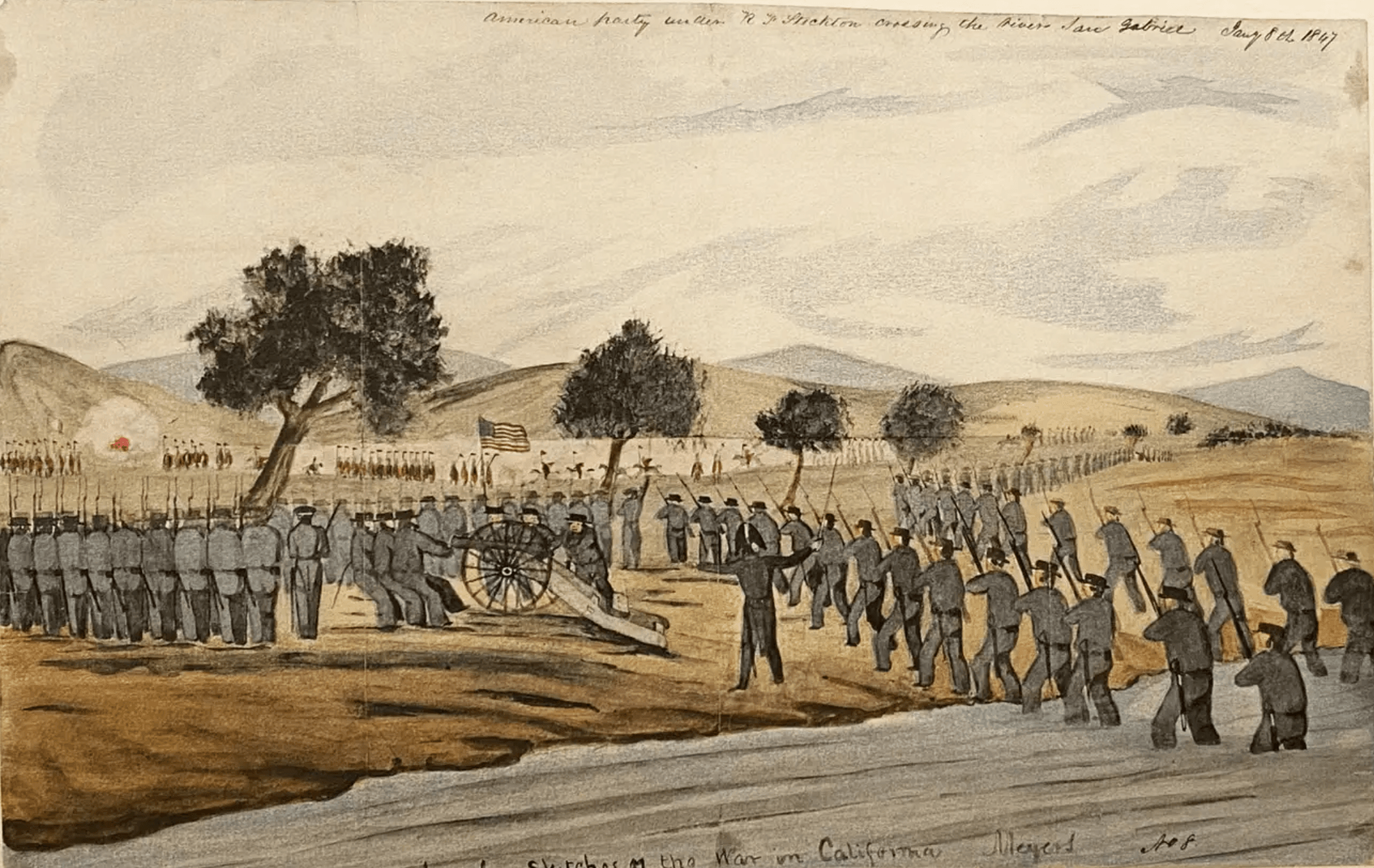
Many Mexican Californios are said to have been indifferent–or even welcoming–to American rule, but Los Angeles' inhabitants had been staunch Mexican loyalists. The sight of the Stars and Stripes being hoisted over their plaza augured a turbulent new chapter in their pueblo's history–one filled with profound social and economic upheaval. A year later, the Treaty of Guadalupe Hidalgo officially ended the war, ceding California to the United States. Waves of American newcomers followed, and Los Angeles began its rough-and-tumble journey from sleepy provincial outpost to sprawling modern metropolis.
Impacts and Imprints
In little more than a decade, many formerly wealthy dons and donas of the pueblo's pastoral era struggled with the new reality. Former Mexican Governor Pio Pico, whose ranch stood not far from the battle site, lost his lands and fortune, as did many others. In contrast, a smaller number, exemplified by figures like prominent Angeleno Antonio Coronel, not only survived the transition but thrived under the new order. Those who didn’t were eventually left further and further behind in the notorious "Sonoratown" barrio as the city's social and commercial gravity shifted south of the Old Plaza.
While the Battle of Río San Gabriel may have receded from the Southland's consciousness, its haunting imprint remains–figuratively and perhaps literally. Some locals swear ghostly gunfire, cavalry charges, and battle shouts still occasionally ring out along the riverbed. Others claim to have actually glimpsed phantom Mexican militiamen wandering about, apparently still dazed and demoralized at their defeat and its long-term consequences.
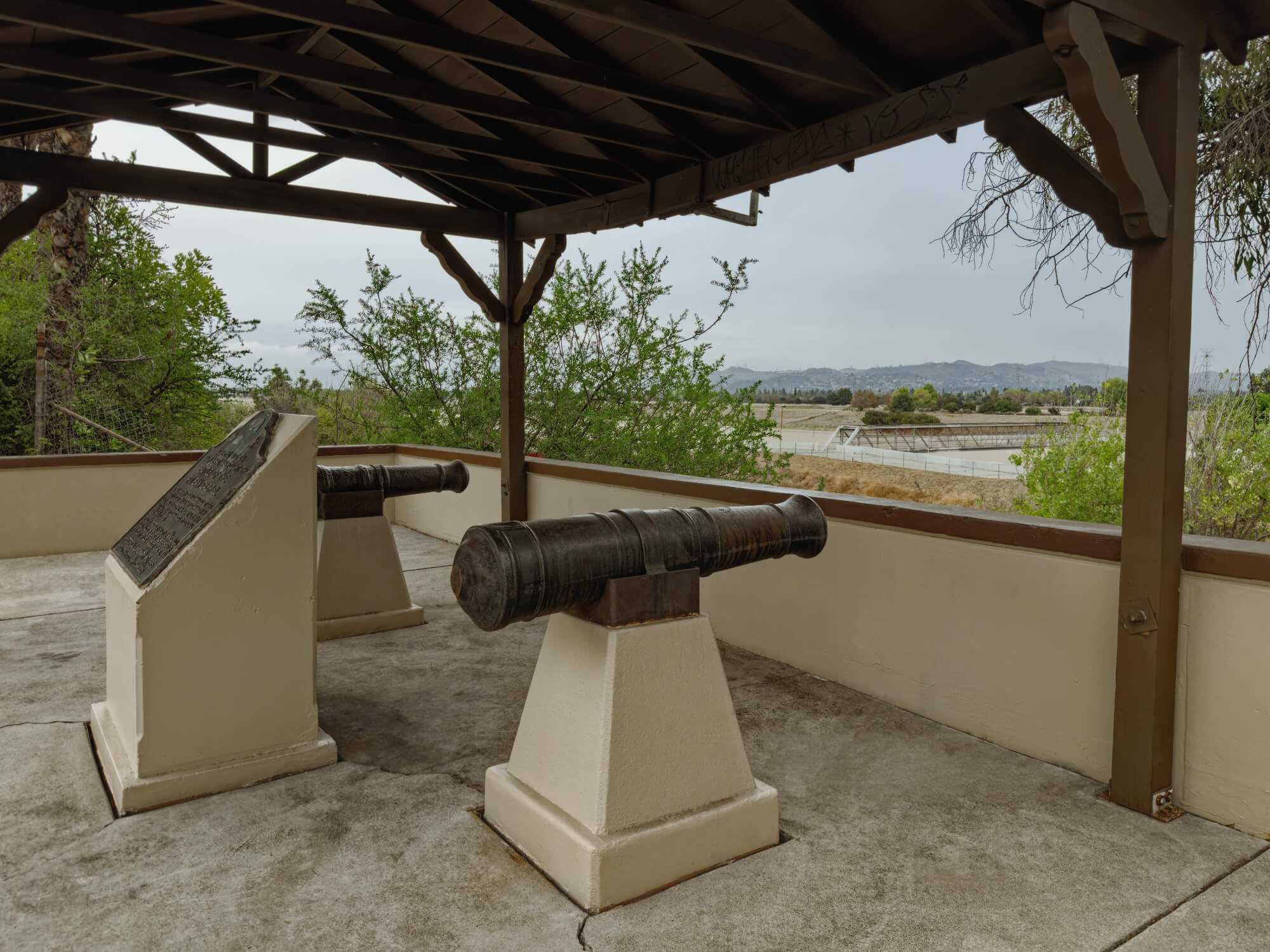
Except for a bikeway and bridle paths, this section of the river is mostly inaccessible, but a modest monument featuring a plaque and two cannons overlooks the site near the Montebello intersection of Washington Blvd. and Bluff Road.